
English| USD
Suggested for you
More currencies
Choose a language
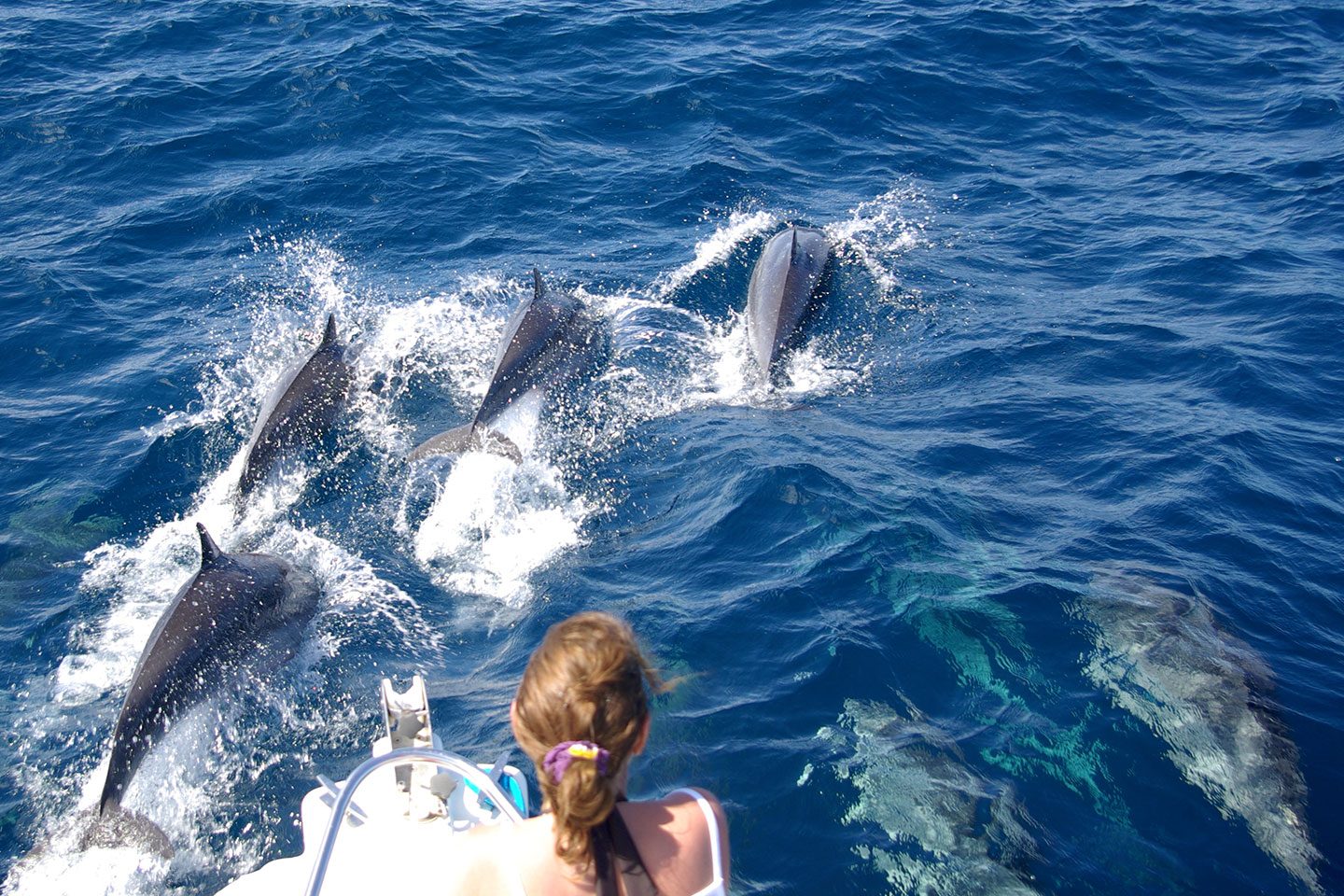
The channel between Martinique's leeward coast and the deep Caribbean shelf is one of the few places where spinner and pantropical spotted dolphins surface within sight of shore. This page explains when boats run from Marina Pointe-du-Bout, why the morning matters, and what determines whether a pod appears at all. No guarantees are made here — only the conditions that raise the odds.
Quick answer
Boats for dolphin watching martinique depart from Marina Pointe-du-Bout in Trois-Îlets, with the marina operating 08:00–12:30 every day of the week. There is no entrance fee to the marina itself — access is free, and individual excursions are privately run at varying rates. Sightings are seasonal and weather-dependent; calm mornings on the leeward side produce the most reliable encounters.
Martinique sits at the edge of a steep underwater drop. Within roughly three kilometres of the west coast, the seabed falls away to more than a thousand metres, which means deep-water species swim close enough to reach in under an hour. Twenty-one cetacean species have been recorded in the waters of the Agoa sanctuary, the French marine protected area covering the entire Antilles exclusive economic zone. Spinner dolphins, pantropical spotted dolphins and bottlenose dolphins are the ones most often encountered on a dolphin watching martinique excursion. Sperm whales and pilot whales pass through the same corridor, which is why crews scan the horizon rather than a fixed point. What a visitor is actually dealing with is a wild-animal encounter governed by rules. Agoa sanctuary protocol restricts how close a vessel may approach, how long it may stay, and how many boats may observe a single pod. Operators licensed under the Haut Fond scheme carry naturalists trained to read surface behaviour — the difference between a resting pod and a feeding one determines whether the boat closes distance or holds back. Swimming with dolphins is not permitted. This frustrates some travellers and reassures others; it is the reason the pods have not abandoned the Caribbean coast entirely, as they have in several over-visited destinations. The geography explains the timing. The leeward flank, from Case-Pilote south past Anses-d'Arlet, sits in the island's wind shadow. The Atlantic side is rougher, and the trade winds build through the day. Flat water in the early hours means a spotter can see a dorsal fin at distance; by midday, whitecaps hide the same animal completely. Any useful dolphin watching martinique guide reduces to that single observation about sea state. The practical conclusion is straightforward. Treat the excursion as a half-day commitment, not an afternoon add-on, and accept that no crew can promise an encounter — reputable ones will say so before casting off. Bring polarised lenses, which cut surface glare and roughly double what an untrained eye picks up. Sightings vary by season and by year; February through June has historically been strong for cetacean traffic, though pods appear year-round. Detailed departure schedules, fee structures, harbour access and a pre-departure checklist are covered in the dedicated sections further down this page.
“Flat water in the early hours means a spotter can see a dorsal fin at distance; by midday, whitecaps hide the same animal completely.”
The best arrival window for dolphin watching in Martinique is 08:00–08:30. Early morning departures significantly increase the probability of spotting active dolphin pods before the sea conditions change later in the day.
24°C to 28°C; lower rainfall
Dryer conditions provide more consistent sea access for tours.
25°C to 30°C; tropical showers
Often ideal for those seeking a balance between weather and tour availability.
26°C to 31°C; increased humidity
Warmer waters and fewer crowds, though occasional tropical storm systems can impact schedules.
—
The 08:00–08:30 arrival window offers the calmest waters and highest frequency of dolphin activity.
Verdict: The optimal time for dolphin watching is the 08:00–08:30 arrival window during the high season months of December through April.
The departure point for dolphin watching tours at Marina Pointe-du-Bout operates on a consistent schedule throughout the week.
Dolphin watching in Martinique is conducted via private boat tours, meaning there is no public admission fee to access the activity site itself. Costs are determined entirely by the private operators managing the excursions.
Verdict: While there is a 0 EUR entrance fee to the marina, visitors pay varying private tour prices based on the specific operator and excursion package selected.
Dolphin watching tours depart from Marina Pointe-du-Bout in the municipality of Trois-Îlets. Accessing this area is most efficient by car or by water shuttle from Fort-de-France.
Follow the N5 and then the D38 toward Pointe-du-Bout
Vedettes Tropicales shuttle from Quai La Jetée in Fort-de-France
Taxi service to Marina Pointe-du-Bout
For the best chance to spot active dolphin pods, plan to arrive at the marina between 08:00 and 08:30. Parking is available within the marina complex, but spaces fill quickly during peak morning hours.
Dolphin watching from Marina Pointe-du-Bout depends on a confirmed boat booking and a few practical preparations made in the weeks before you sail.
Everything you need to know about dolphin watching martinique
For dolphin watching martinique, the best arrival window is between 08:00 and 08:30. Early morning departures are recommended to maximize the chance of spotting active pods in their natural habitat. There is no entrance fee for dolphin watching martinique as it is a private tour activity. Fees vary depending on the specific excursion provider chosen for your boat trip. Tours typically depart from Marina Pointe-du-Bout in Trois-Îlets. This central location serves as the primary hub for operators organizing marine wildlife observation activities. Yes, these outings are generally family-friendly and offer an educational experience for all ages. It is recommended to check with individual operators regarding specific age requirements or safety equipment for young children. Aside from various dolphin species, visitors often encounter pilot whales and other marine life during a Caribbean cetacean observation cruise. The deep waters off the coast provide a rich environment for these animals to thrive. Most boat excursions in the region last several hours. This timeframe allows sufficient travel time to reach open waters while ensuring a comfortable pace for observation and return.